In 30 Seconds
- A CESS survey of 817 households finds the flagship scheme eased moneylender dependence for better-off farmers while marginal and tenant farmers stayed stuck.
- Telangana's flagship Rythu Bandhu scheme has helped farmers who already own a decent patch of land.
- Part of the problem is who gets counted.
Telangana's flagship Rythu Bandhu scheme has helped farmers who already own a decent patch of land. The farmers who need it most have largely been left out, according to a new study by the Centre for Economic and Social Studies (CESS) in Hyderabad. Based on a survey of 817 households across five districts, the report says tenant cultivators and the poorest landholders are still leaning on informal moneylenders.
The numbers show the split. Between 2015 and 2020, the share of small farmers borrowing from informal sources fell from 84.7 per cent to 70.2 per cent. Among medium farmers it dropped from 82.5 to 62.1 per cent, and among large farmers from 78.1 to 64.9 per cent. Marginal farmers barely moved, going from 91.8 per cent to 90.8 per cent. Put simply, the scheme gave breathing room to people who already had some.
Part of the problem is who gets counted. Rythu Bandhu is formally open to all landowning farmers, yet CESS found that 27.72 per cent of farmland in the surveyed villages sat outside the scheme. The report blames missing or inaccurate pattadar passbooks, and mismatches between Aadhaar, bank-account and land-record details. Land classified as forest, podu, community or wasteland adds to the gap.
The exclusion also falls hardest on the smallest farmers. About 30.59 per cent of marginal farmers' land was uncovered, against 14.47 per cent for large farmers. Village-level figures are starker: in Bussapur, nearly 60 per cent of forest-classified land was outside the scheme, and in Gareebpeta 58.4 per cent of land remained uncovered.
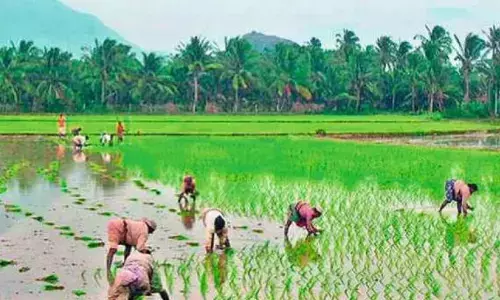
Then there is the structural catch: the scheme pays the person on the land record, not the person in the field. Tenant farmers, who do the actual cultivating, get no direct benefit, and the study found they continue to depend heavily on informal lenders.
CESS wants the scheme rebuilt around cultivation rather than ownership. Its recommendations include covering small and marginal landowners and tenants working under five acres, capping beneficiaries at five acres, and excluding absentee or non-cultivating landowners. It also urges the state to document tenant farmers and agricultural labourers, settle tribal land-title issues, and fix administrative gaps in the Dharani portal.
The report's argument is that a cultivation-based model would target support better, protect vulnerable cultivators and make Telangana's farm support system fairer and more sustainable. Source: Deccan Chronicle.