In 30 Seconds
- Over 200 rare photographs, archival recordings and personal belongings trace the making of a Bharat Ratna vocalist through the eight praharas of a day.
- An audio-visual and photographic exhibition on the Hindustani classical vocalist Pandit Bhimsen Joshi opened on November 23 at the Zapurza Museum of Art and Culture in Pune.
- The display draws on more than 200 rare photographs, archival recordings and personal belongings.
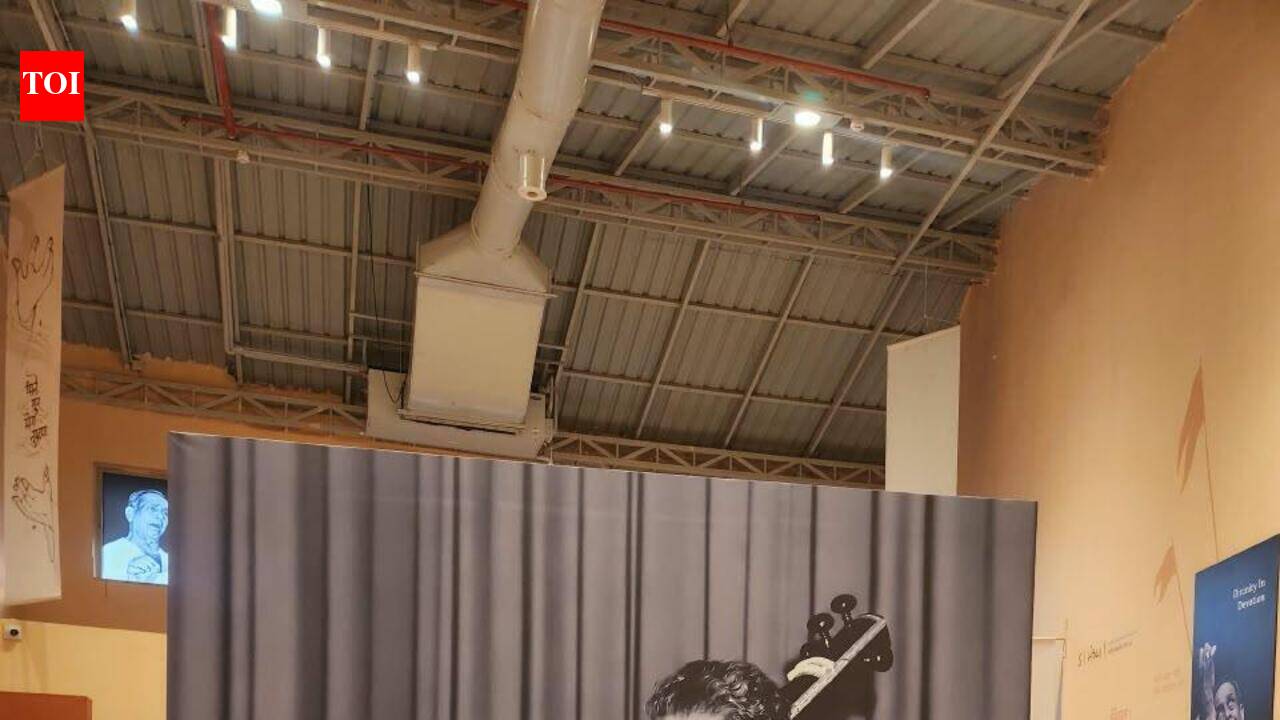
An audio-visual and photographic exhibition on the Hindustani classical vocalist Pandit Bhimsen Joshi opened on November 23 at the Zapurza Museum of Art and Culture in Pune. Titled 'Bhimsen - The Man and His Music', it will remain open to visitors for one year.
The display draws on more than 200 rare photographs, archival recordings and personal belongings. Joshi received the Bharat Ratna in 2009, and the exhibition places his career within a long, disciplined apprenticeship rather than presenting it only as a story of acclaim.
Conceptualised by Ajit Gadgil, the show is organised around the eight praharas, or phases, of the day, with each section standing for a stage in the singer's life. It begins with his birth and childhood, then follows his search for a guru, intensive practice and early successes. Later sections cover his recorded works and artistic legacy, and the final one is designed to recreate the atmosphere of attending one of his concerts.
The narrative is anchored in familiar milestones. As a boy, Joshi left home and travelled by train from town to town in pursuit of music. By ten he had settled on his purpose, and at thirteen he met the vocalist Pandit Sawai Gandharva, an encounter that gave his path its defining direction.
The photographic collection includes pictures Joshi took himself, illustrations of key childhood episodes, and works by photographers such as Raghu Rai, Satish Paknikar, OP Sharma, Jitendra Arya, Mohan Wagh, Saaz Agarwal, Jayant Joshi and Anil Deshpande, each with explanatory notes. His personal tanpura, awards and mementos are on view. Visitors can also watch interview excerpts, hear recordings and see a 1968 documentary by Vikas Desai, restored by the Film and Television Institute of India.
Gadgil said the aim goes beyond remembrance: to preserve the musical legacy, inspire younger generations and deepen their link with classical music. Joshi's son, the visual artist Jayant Joshi, said the exhibition offers young people an example of sustained commitment at a time when digital technology absorbs much of their attention. He pointed to his father's early clarity of goal, hard work, sacrifice and dedication.
The exhibition was developed with contributions from Jayant Joshi, Yashoda Joshi, Parag Natekar and Ashwin Chikerur. Its year-long run gives schools and families an extended opportunity to engage with the archive. Source: Times of India