In 30 Seconds
- The head of the Congressional Asian Pacific American Caucus says small Asian American-owned businesses would be hit hardest, and promises a push to return trade powers to Congress.
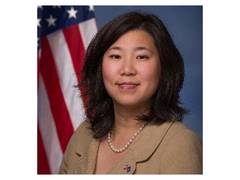
- Representative Grace Meng of New York, who chairs the Congressional Asian Pacific American Caucus (CAPAC), has criticised the Trump administration's proposal for a new round of tariffs on 14 economies, nearly all in Asia.
- Meng said businesses owned by Asian Americans, Native Hawaiians and Pacific Islanders would be "hit especially hard".
Representative Grace Meng of New York, who chairs the Congressional Asian Pacific American Caucus (CAPAC), has criticised the Trump administration's proposal for a new round of tariffs on 14 economies, nearly all in Asia. India is on the list, alongside China, Japan, South Korea, Taiwan, Singapore, Vietnam, Thailand, Malaysia, Indonesia, Cambodia and Bangladesh.
Meng said businesses owned by Asian Americans, Native Hawaiians and Pacific Islanders would be "hit especially hard". Many of them, she said, depend on imported ethnic and cultural goods that cannot be made in the United States. She named Chinatown in New York City, Little India in Chicago and Little Saigon in Orange County as communities under pressure.
Her statement also looked ahead. Meng said CAPAC members plan to use Article I of the Constitution next year to reclaim Congress's authority over trade and to work to end the tariffs.
The statement cited several figures. It says the average US household has paid more than USD 4,700 extra for goods and services because of rising costs under President Trump. In a post-midterm survey of Asian American and Pacific Islander voters, 53 per cent named the cost of living and inflation as a top issue. Jobs and the economy came next at 37 per cent, then health care costs at 33 per cent.
The statement also stressed how much these businesses contribute to the US economy. They make up 11 per cent of all employer businesses, though the community is only 7 per cent of the population. They employ more than 5 million Americans and generate over a trillion dollars in sales. Nearly one in five restaurant and hospitality businesses is Asian-owned.
For readers in India, the key point is that India is named in the proposal, so the debate in Washington could shape trade between the two countries. The proposal is still a plan, and Congress is already preparing to push back. The statement notes that the Supreme Court struck down the administration's earlier sweeping tariffs under the IEEPA in February 2026.