In 30 Seconds
- Planned rail, port, pipeline and special economic zone projects could lift bilateral commerce, but only if the promised frameworks are delivered.
- Trade between India and Nepal remains well below what the two neighbours could achieve, and a recent visit by Prime Minister Balendra Shah has produced a fresh set of plans to close that gap.
- India is Nepal's largest trading partner and its biggest source of investment, infrastructure support and essential goods.
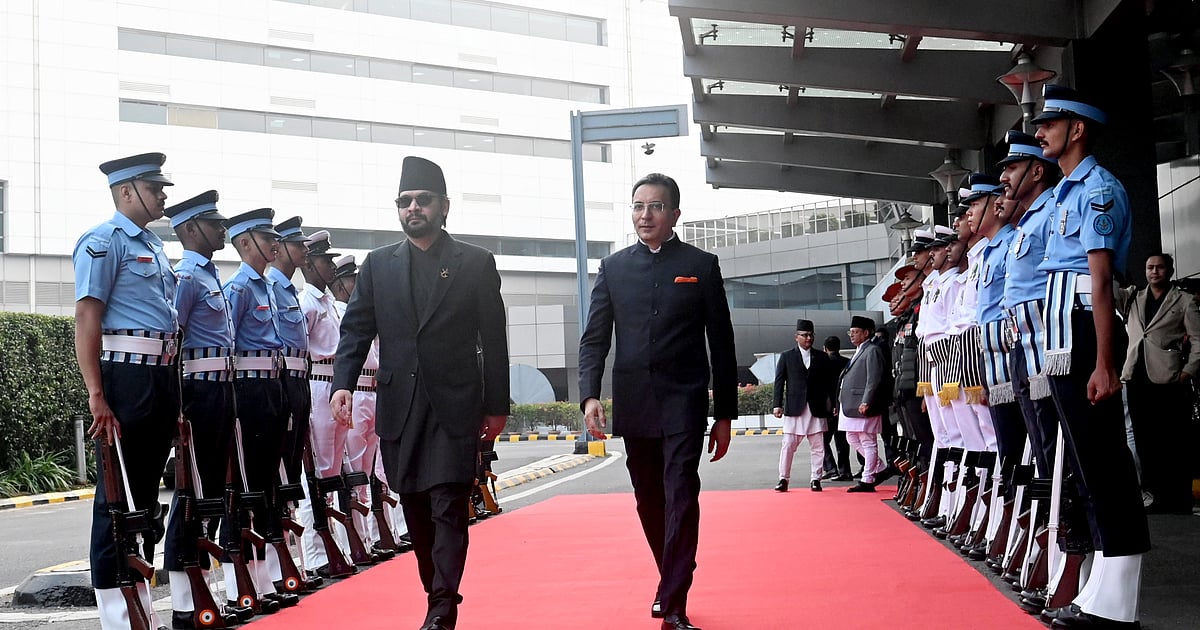
Trade between India and Nepal remains well below what the two neighbours could achieve, and a recent visit by Prime Minister Balendra Shah has produced a fresh set of plans to close that gap. The agenda covers cross-border logistics, financial linkages and energy links, along with proposals for healthcare, pharmaceutical and tourism exchanges. An opinion piece in The New Indian Express argues that the blueprint is credible but depends on sustained follow-through, including a high-level monitoring mechanism to track results.
India is Nepal's largest trading partner and its biggest source of investment, infrastructure support and essential goods. The gap between that weight and the actual volume of economic exchange is the central puzzle. The two economies are complementary: Nepal offers hydropower, agricultural produce and a labour base, while India brings manufacturing depth, capital and engineering capacity. Integrated value chains, cross-border investment and job creation are all within reach if the friction points are removed.
Much of the policy weight rests on a review of the existing trade and investment frameworks. A more modern arrangement could address current business needs, widen market access and give investors clearer rules to plan around. Commitments to encourage Indian investment in Nepal's priority sectors, backed by measures that build investor confidence and simplify doing business, are equally important. Predictability, not just headline pledges, will decide whether capital actually moves.
Financing is also on the table. India's development cooperation package, totalling ₹15,000 crore, splits into ₹3,500 crore for post-disaster reconstruction and infrastructure and ₹11,500 crore in concessional credit for energy projects. For Indian firms in construction, engineering, equipment and project management, the package signals a pipeline of work. Proposed cross-border special economic zones, industrial parks, an Agro-Industrial Park in Chitwan and IT parks could give food processing, textiles, pharmaceuticals, light engineering and digital services a platform to grow, with Indian companies partnering Nepali enterprises.
Connectivity and energy form the physical backbone of the plan. Recent steps, including the Ayodhya-Janakpur rail service, the Dharchula-Darchula motorable bridge and work on integrated check posts, show that some projects are moving. Future proposals include an electrified Raxaul-Kathmandu railway, access to Indian ports such as Deendayal at Kandla and, subject to infrastructure, Paradip, and expanded petroleum pipelines. Diversifying transit routes would ease Nepal's reliance on a few logistics corridors, while energy cooperation rooted in Nepal's hydropower potential could meet India's growing demand. The test now is execution.
Read the full analysis at The New Indian Express.