In 30 Seconds
- A retired High Court judge will lead a state committee to recommend changes to the Centre's proposed Western Ghats ESA, as villages prepare their own maps amid farmer anxieties.
- The committee will work from ground-truthing data and records of land grants and pending claims.
- The exercise follows a long-running dispute over the ESA.
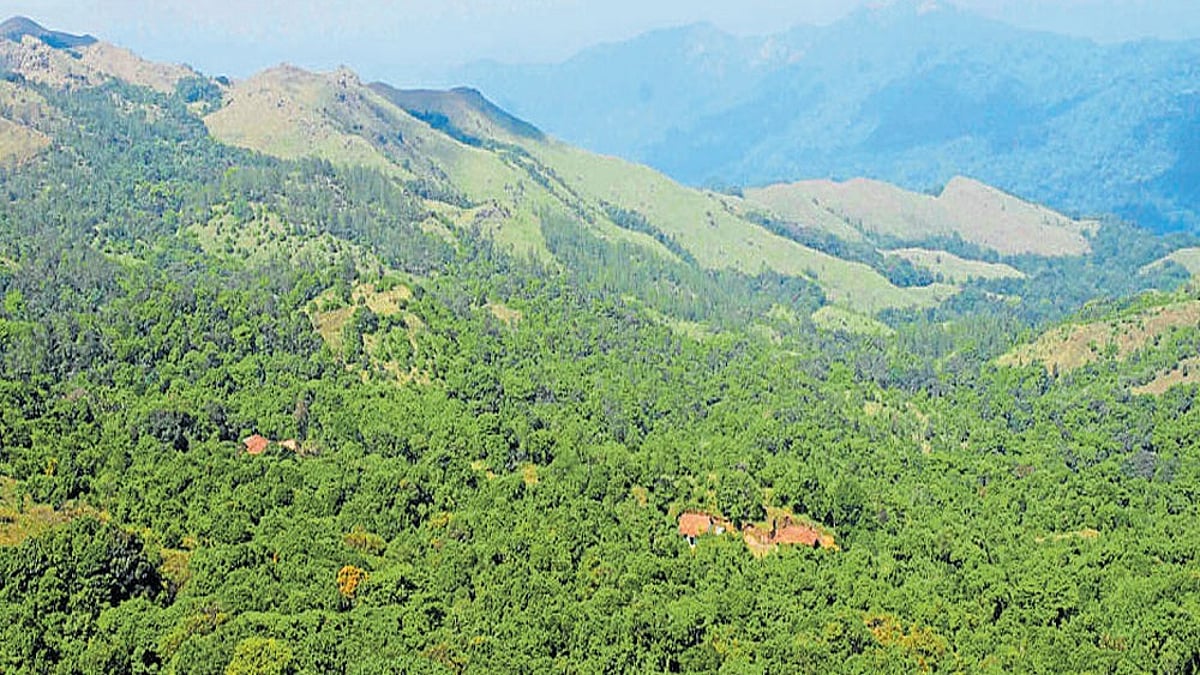
The Karnataka government has constituted a nine-member high-level committee, chaired by Justice (retd) John Michael D'Cunha of the Karnataka High Court, to review and recommend changes to the proposed Eco-Sensitive Area (ESA) in the Western Ghats, a Unesco-recognised biodiversity hotspot. The panel is tasked with examining the provisions of the Kasturirangan Report, which forms the basis of the Centre's draft notifications, and suggesting modifications and corrective measures.
The committee will work from ground-truthing data and records of land grants and pending claims. Alongside it, the state has set up gram panchayat-level committees, each led by the panchayat chairman, to carry out physical verification, run public awareness efforts and collect representations from residents. A four-member committee at the village level will finalise local maps and pass them to the high-level panel.
The exercise follows a long-running dispute over the ESA. The Ministry of Environment, Forests and Climate Change has issued draft notifications since 2014, and the sixth was released in July this year. Those drafts draw on a report led by former ISRO chief K Kasturirangan and set out rules meant to curb harmful activity such as mining while allowing eco-friendly uses such as agriculture. Across the Western Ghats, the proposed ESA covers 56,825.7 sq km, and Karnataka's share is 20,668 sq km, or 36.3 per cent of the total, which makes the state's position central to the outcome.
Opposition to the draft has crossed party lines. In September, the state legislature held a three-day special session on the sixth draft, and both the Assembly and the Council unanimously urged the Centre to confine the ESA to notified forest areas, exclude agricultural land and human settlements, and leave out lands where claims remain pending. The state's push therefore amounts to a formal request for the Centre to narrow the zone, not merely a administrative review.
Conservationists and civil society groups have criticised political leaders for not taking residents into confidence. They point out that the Kasturirangan report has not been made available in Kannada, a gap they say leaves room for vested interests to spread misinformation. Their concern is visible on the ground: although the draft already excludes agriculture and plantations, many farmers fear that restrictions will still hit their livelihoods. Whether the new committees can close that information gap, and reconcile conservation goals with land rights, will shape how the final ESA looks in Karnataka.
Read the original report at Deccan Herald.