In 30 Seconds
- A 48-hour hackathon on the Amaravati campus drew students from 20 Andhra Pradesh colleges to work on problems set by NASA, a modest but telling sign of where the state's talent pipeline is being pointed.
- Teams spent the two days developing solutions in areas tied to space technology, data science and scientific research.
- The local organisation was led by Dr Deepthi Godavarthi as Faculty Coordinator and Shivansh Shukla, founder of Shieldnex Aerospace and an M Tech student at the university, who served as Local Lead.
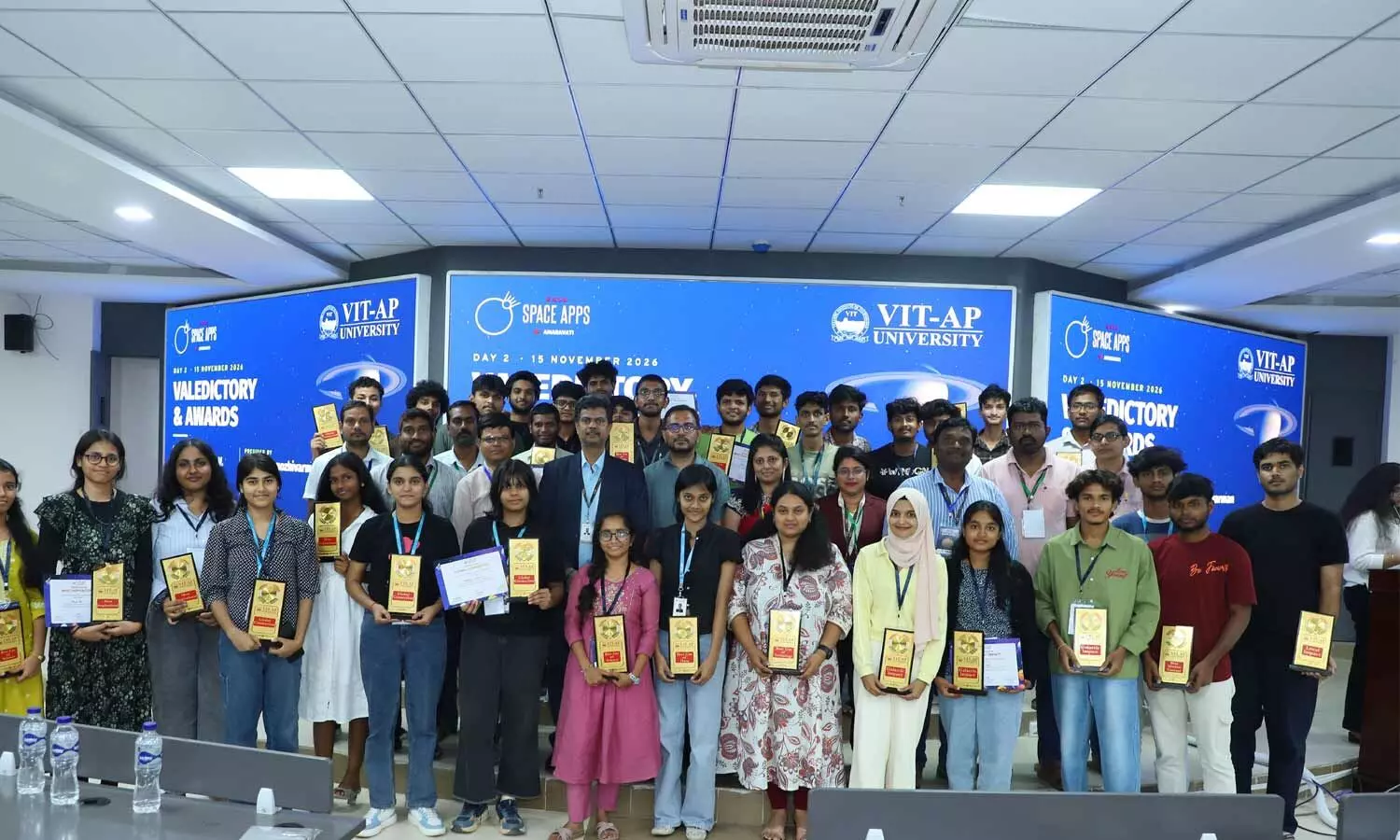
VIT-AP University hosted the NASA Space Apps Challenge 2026 at its Amaravati campus on November 14 and 15, putting more than 300 students from 20 colleges across Andhra Pradesh through a 48-hour hackathon built around problems posed by NASA.
Teams spent the two days developing solutions in areas tied to space technology, data science and scientific research. The format is the event's whole point: tight deadline, open-ended problem, and a premium on improvisation over polish. Few undergraduate courses reward that combination, which is partly why such events keep filling up.
The local organisation was led by Dr Deepthi Godavarthi as Faculty Coordinator and Shivansh Shukla, founder of Shieldnex Aerospace and an M Tech student at the university, who served as Local Lead. That a student-founder of an aerospace start-up helped run the show is a small detail worth noticing: it suggests the line between classroom and company is getting thinner.
The university's leadership, including Vice-Chancellor Dr P Arulmozhivarman, Registrar Dr Jagadish Chandra Mudiganti and Dean of the School of Computer Science and Engineering Dr Sudhakar Illango, were credited with backing the event.
Dr V Jayachandran, a scientist at the National Atmospheric Research Laboratory (NARL), was chief guest. He stressed scientific curiosity, innovation and collaboration as the foundations of progress in the space sector, and urged students to chase new ideas and explore emerging technological opportunities.
Why it matters: India has been opening up its space sector to private players, and that shift needs a workforce comfortable with satellite data, analytics and rapid prototyping. A single regional hackathon will not build that workforce, but drawing hundreds of students from two dozen-odd institutions into a globally branded challenge gives Andhra Pradesh's campuses a low-cost on-ramp. The source report did not detail winners or project outcomes, which will be the real test of whether the weekend produced more than enthusiasm.