In 30 Seconds
- The former Foreign Secretary says Beijing is India's biggest strategic test, and that New Delhi will have to meet it largely with its own resources.
- Former Foreign Secretary Ranjan Mathai has urged India to keep talking to China while preparing for the worst, saying New Delhi should combine dialogue with firm military readiness along the border.
- Mathai, who held the foreign secretary's post from August 2011 to July 2013, called China India's foremost strategic challenge.
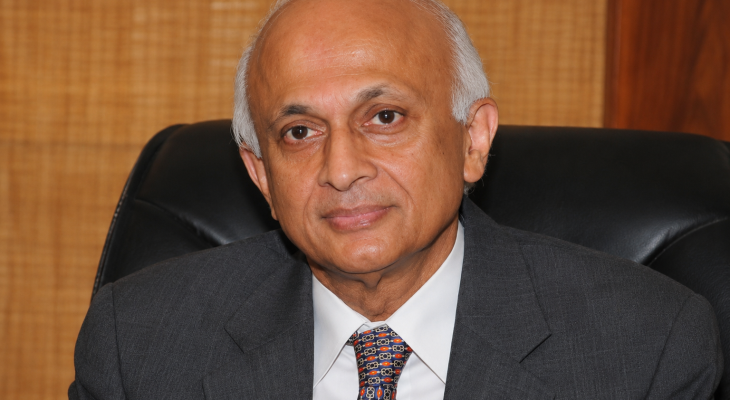
Former Foreign Secretary Ranjan Mathai has urged India to keep talking to China while preparing for the worst, saying New Delhi should combine dialogue with firm military readiness along the border. Speaking in New Delhi at the 21st foundation day of the Centre for Land Warfare Studies (CLAWS), he summed up his advice with an old line: "keep talking but keep the powder dry."
Mathai, who held the foreign secretary's post from August 2011 to July 2013, called China India's foremost strategic challenge. He pointed to the wide gap between the two countries in military, economic and technological strength. He described Beijing as strategically hostile and said it sought to limit India's growth and geopolitical choices. He added that the Pakistan threat is made harder by China's growing influence and partnership with Islamabad.
On the ground, his message was practical. India, he said, must stay highly vigilant along the frontier and make sure troops posted there have the supplies and equipment to handle any contingency. "Conflicts are not to be ruled out," he said.
His bluntest point was about going it alone. India will have to deal with China "with our own resources," Mathai said. Partnerships with other countries could ease some pressures, he argued, but would not give India every capability needed to meet the full range of security threats.
That is where the economy comes in. Mathai flagged China's grip on critical supply chains, especially rare earths. He noted that Beijing's export control rules can reach products containing even a small share of Chinese-origin rare earth material. India, he said, will need considerable time to build its own capacity, which makes stronger domestic defence manufacturing and readiness for short-term conflicts essential.
He also placed the issue in a shifting world order. Unipolarity appears to be over, he said, yet neither a bipolar nor a truly multipolar system has fully formed. In that environment, he argued, trade, finance, technology access and natural resources are increasingly used as weapons. AI, advanced computing, chips, biotechnology, materials science and energy security all count as pillars of national power.
Mathai noted that China's rise lets it grow its military and extend its reach beyond its neighbourhood, though he said it has weaknesses too, including heavy reliance on external markets. His prescription for India: speed up economic and technological development, close the gap between research and real-world products, and cut dependence on outside sources for energy, critical minerals and defence technology. He also pointed to continued engagement with partners such as the United States, Russia, Japan, France and Germany.
Read the original report at BW Businessworld.