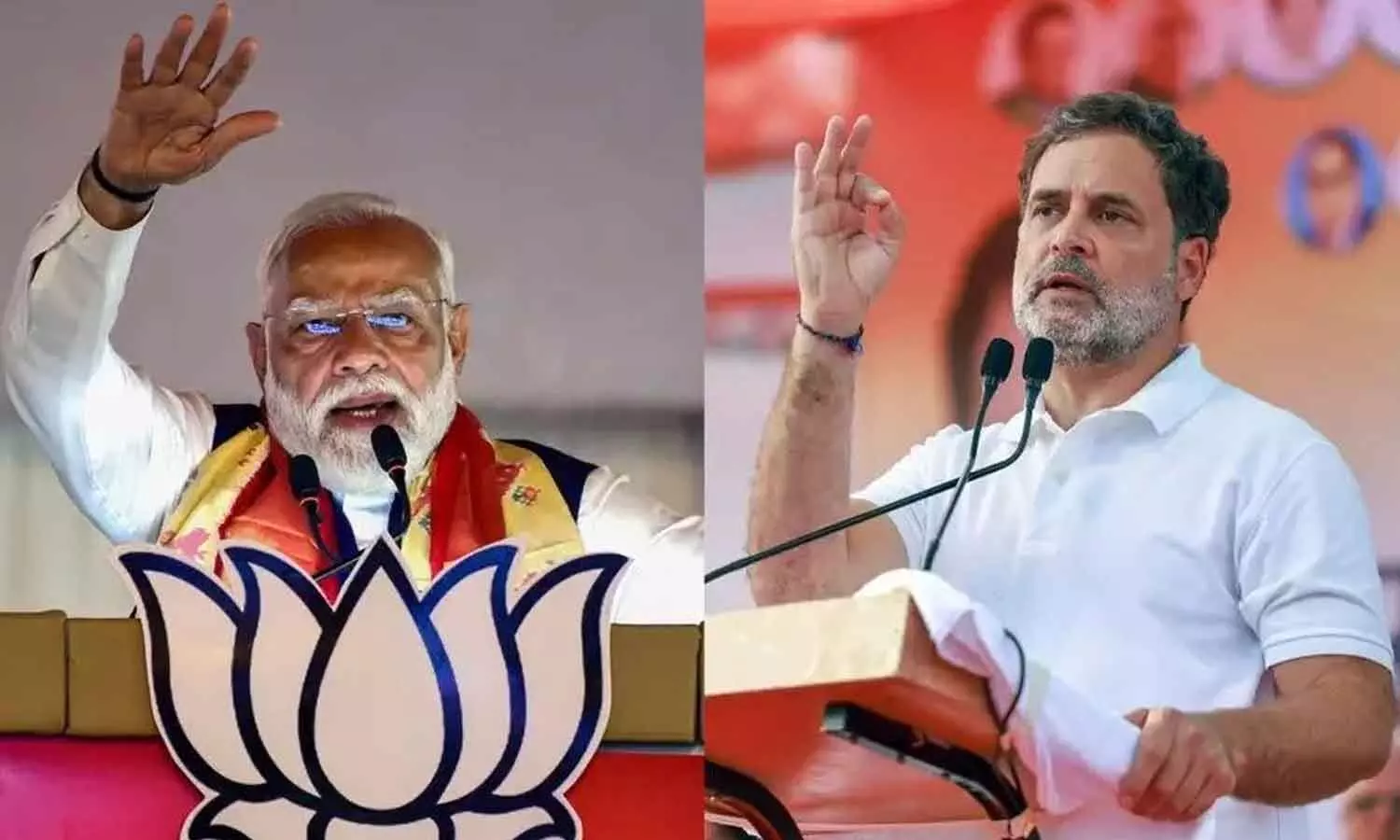
In 30 Seconds
- Rahul Gandhi's Hyderabad speech cast him as the opposition's lead challenger to Narendra Modi, yet an analysis of his rise points to strategic weak spots.
- Gandhi also questioned whether democracy still exists in India.
- The analysis credits two developments for Gandhi's rise as the main face of the INDI Alliance.
Rahul Gandhi used the closing session of the two-day Bharat Summit in Hyderabad last week to attack what he called fascist forces running India, and to declare he would beat them with "truth, love and non-violence." The Lok Sabha Leader of Opposition did not name Prime Minister Narendra Modi in that remark. He later said defeating Modi was "a done deal."
Gandhi also questioned whether democracy still exists in India. The target was plain, according to an analysis in The Hans India, which asks whether he can stop Modi from winning a fourth straight term in the 2029 general election.
The analysis credits two developments for Gandhi's rise as the main face of the INDI Alliance. First, he has turned more combative on the street, leading protests over exam paper leaks and over alleged discrepancies in voter lists that he says favour the BJP. Second, key regional rivals have weakened. The piece names Mamata Banerjee in West Bengal and, outside the bloc, Arvind Kejriwal of AAP, both of whom once had national ambitions.
The result, the analysis argues, is that Gandhi faces no clear challenger for the national opposition space. It also warns that consolidating the opposition is easier than beating Modi, who has kept Congress out of power in Gujarat for more than 25 years and has led the BJP to three terms at the Centre and into government in over 20 states.
The summit itself drew criticism. The Congress-run Telangana government under Chief Minister Revanth Reddy hosted it and invited representatives from 70 countries to discuss democracy and global policy. Critics said it looked more like a party event than a state one. The BJP and the Bharat Rashtra Samithi objected, and the BJP has already accused Congress of treating Telangana as its cash machine. Some Telangana ministers defended the event as a pitch for investment, though the analysis notes Gandhi's keynote did not mention investment.
The stakes in the state are high. The analysis calls a win in the 2028 Telangana Assembly election central to Congress's 2029 plans, and it lists the party's 2019 alliance with the Shiv Sena as another strategic misstep. For Gandhi, the opposition's lead role now comes with a test of whether he can turn protest energy and weaker rivals into a winning national campaign.
Read the full analysis: Will Rahul Gandhi defeat Modi in 2029? (The Hans India).