In 30 Seconds
- A fresh war of words over the economy pits the Congress leader's 'failed model' claim against export, GDP and jobs figures cited by an opinion column in ThePrint.
- Congress leader Rahul Gandhi says India's economic model has failed.
- The column's author responds with numbers.
Congress leader Rahul Gandhi says India's economic model has failed. An opinion column in ThePrint argues the latest data points the other way. The disagreement, which has been building for weeks, is now a full argument over whether the country's growth story is real or overstated.
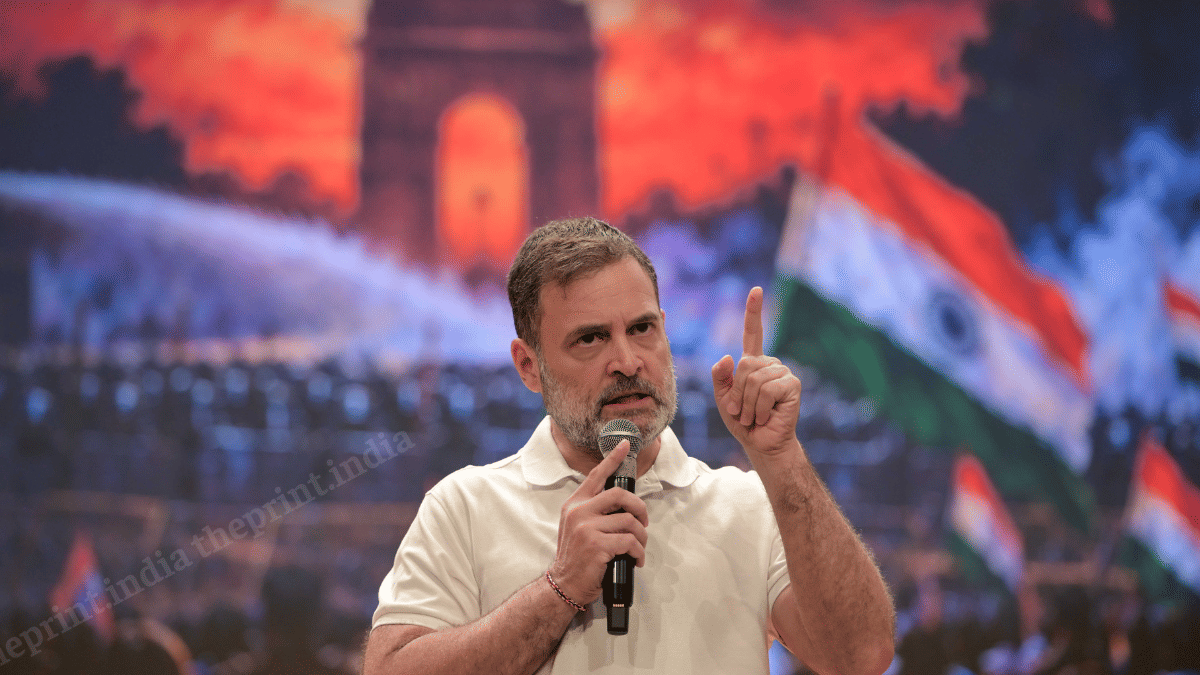
Speaking at the Bharat Summit in Hyderabad, Gandhi said the model that once worked for India "no longer works and will never work." As the column describes his remarks, he tied that view to concentrated wealth, closeness between political and corporate power, and a weakening of democracy. He also said that after the collapse, a large amount of money was printed, creating liquidity that damaged the political system.
The column's author responds with numbers. Citing a report, the piece says exports have grown year on year for seven straight months. Between April and October of FY2026-27, they rose 16.6 per cent to USD 568.84 billion. It also points to 7.8 per cent GDP growth in April-June and unemployment easing to 5.1 per cent.
The author then lists outside voices. IMF chief Kristalina Georgieva is quoted calling India a "bright spot," and IMF spokesperson Julie Kozack is quoted calling it a key growth engine for the world. The World Bank is cited as describing India as one of the fastest-growing major economies. Economists Daniel Waldenström, Jeffrey Sachs, Niall Ferguson and Joseph Stiglitz are also cited with generally upbeat remarks. Sachs's comment carries a condition: India could overtake the US in purchasing-power terms only "if it does the right things."
The column is blunt about Gandhi himself, and it is an opinion piece, so its tone and conclusions are the author's own. It also says Gandhi did not specify which model he meant, when it collapsed, or who printed the money. That last point is a fair question for any economic claim: which policy, which date, which data.
For readers, the useful takeaway is that headline indicators and lived experience can point in different directions. Strong exports and GDP growth do not settle the issues Gandhi raised, such as who benefits from growth and how power and money intersect. Likewise, a sweeping "failure" claim needs specifics to be tested. Expect both sides to keep trading figures and charges as the political season heats up.
Note: the figures and quotes above are as presented in the opinion column and have not been independently verified here. Read the original piece at ThePrint.