In 30 Seconds
- Young creators in Jagtial district have turned village life into popular online entertainment, but an opinion piece argues that views and subscribers have not translated into creative control or financial security.
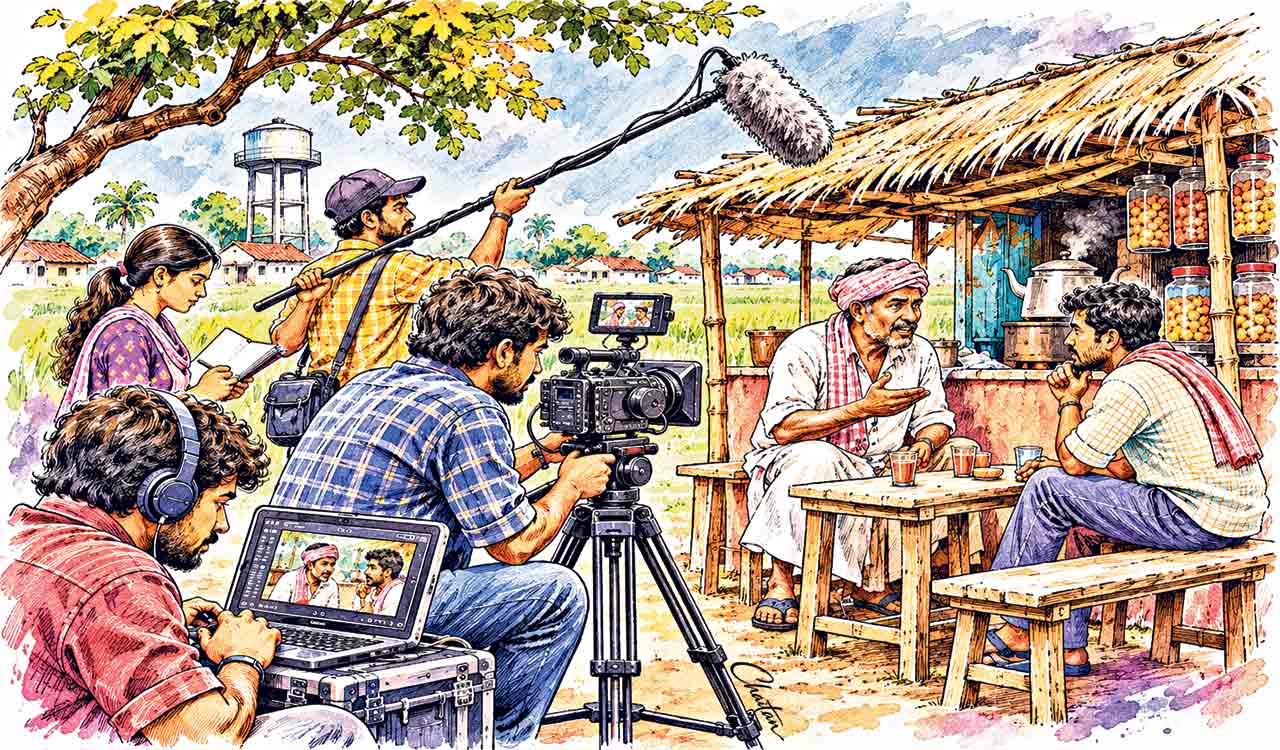
- In Lambadipally, a hamlet in Telangana's Jagtial district, a tea stall built in an open field serves no customers: it is a film set for a YouTube video.
- For decades, the authors note, mainstream cinema and television portrayed villages through stories made largely in cities such as Hyderabad and Chennai.
In Lambadipally, a hamlet in Telangana's Jagtial district, a tea stall built in an open field serves no customers: it is a film set for a YouTube video. The scene, described in an opinion piece by Srikanth Nayaka and Nimmagadda Bhargav, illustrates how rural creators are now producing entertainment in their own villages and for audiences well beyond them.
For decades, the authors note, mainstream cinema and television portrayed villages through stories made largely in cities such as Hyderabad and Chennai. Rural people featured in tales of poverty, migration, tradition and development, but seldom had a say in how they were represented. Digital platforms are beginning to shift that balance.
The central example is My Village Show, a Telangana-based YouTube collective founded in Lambadipally by Sriram Srikanth. Its early videos, some shot and edited on a third-generation iPad, used comedy, songs and short films to take up sanitation, public health and village elections. The team relied on local dialect, familiar characters and village festivals. One video, Village PUBG in Real Life, a comic take on mobile gaming addiction, drew millions of views.
The group has since grown into a media enterprise with several channels and a team of writers, actors, directors, cinematographers and editors. According to the authors, some members have moved on to Telugu cinema and reality shows. They argue this challenges the belief that compelling entertainment can only come from metros, and that rural creators are mere amateurs with smartphones.
The piece also sounds a note of caution. As the collective invested in better cameras, editing and original music, it produced Husharu Pittalu, a web series that took months to finish, with an initial budget of about Rs 5 lakh plus further spending on salaries and music. The expected income from paid promotions and platform monetisation did not arrive, leaving the project financially unsustainable despite the group's popularity.
The authors' message is that a large audience is not the same as a steady livelihood. Unequal access to sponsors, commercial networks, training and investment leaves rural creators exposed, and the push for higher production quality can deepen that vulnerability. They call for the creator economy to be recognised as an emerging cultural industry, sustained by writers, performers and technicians whose work is often hidden behind subscriber counts.
Read the full opinion piece: Opinion: When Telangana's villages become film studios, who calls the shots?