In 30 Seconds
- The IPL founder's British passport raises fresh questions about a long-running money laundering case and about how India pursues financial offenders who leave the country.
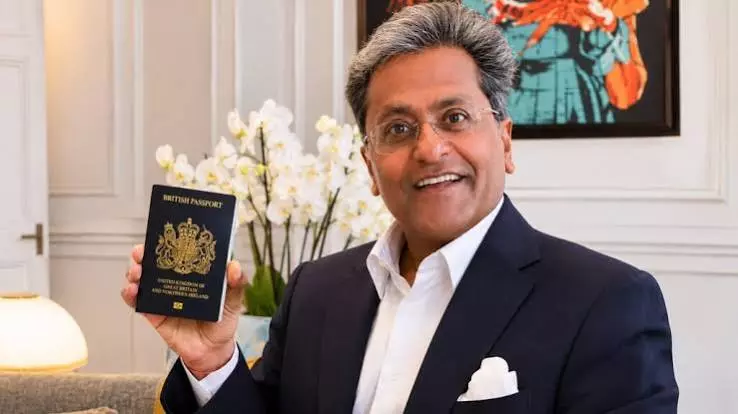
- Lalit Modi, the founder of the Indian Premier League, has acquired British citizenship, and an Asian Age editorial argues that this may have placed him effectively beyond India's reach on extradition.
- British citizenship does not automatically bar extradition, a point the editorial itself concedes.
Lalit Modi, the founder of the Indian Premier League, has acquired British citizenship, and an Asian Age editorial argues that this may have placed him effectively beyond India's reach on extradition. Modi has lived abroad for years, largely in London, where he has been a visible figure in social circles and has been seen alongside Vijay Mallya, another IPL stakeholder who left India under a cloud.
British citizenship does not automatically bar extradition, a point the editorial itself concedes. The more telling figures are the timelines. By the editorial's account, Modi left India 16 years ago, and about 14 years have passed since New Delhi said it first sought his return to face money laundering and related charges. Read together, the editorial suggests, those years make a clean return unlikely and signal a near-permanent break with the country where the league was born.
The editorial draws a sharp contrast with those who stayed behind to contest similar allegations. Many of them, it says, have endured investigations and court proceedings that feel like punishment in themselves, and some have lost property pledged as collateral. Wealthier figures who could afford to leave, the piece argues, have been able to use costly legal teams to keep pursuers at a distance, trading their homeland for a more comfortable life abroad.
The IPL backdrop adds weight to the story. The editorial notes that betting and match-fixing networks operated freely around the league, prompting the Supreme Court to act against some franchises and team owners. It also recalls the expulsion of the Kochi franchise, a decision that Modi has contested, saying it made him a marked man. The editorial further reports an allegation, framed as something that is said rather than proven, that Modi rerouted IPL funds amounting to hundreds of crores. These are claims rather than findings, and they should be read that way.
For policy watchers, the broader lesson is about enforcement. The editorial argues that repeated financial failures, many costing ordinary depositors money that is seldom fully recovered, expose weak systemic checks, and that those accused of large losses often find flight more appealing than a slow legal process. Modi's legacy is complicated by that reading. He built a league that has become one of the most valuable in professional sport, yet the question of whether the law can reach those who leave with its proceeds remains unresolved.
Read the full editorial at Asian Age.