In 30 Seconds
- The tractor giant's latest ag-robotics purchase suggests the real prize in precision farming is not the picture of the orchard but the machine that acts on it.
- John Deere has acquired Orchard Robotics, a three-year-old startup whose AI camera system reads fruit and vine conditions as tractors drive past.
- It is the newest entry in a well-worn acquisition playbook.
John Deere has acquired Orchard Robotics, a three-year-old startup whose AI camera system reads fruit and vine conditions as tractors drive past. Financial terms were not disclosed. The deal adds crop-level intelligence to a Deere portfolio already heavy on machines that spray, drive and sow.
It is the newest entry in a well-worn acquisition playbook. Deere bought Blue River Technology, the See & Spray developer, in 2017; Bear Flag Robotics, which makes autonomous tractors, in 2021; and Sentera (drone imagery and crop intelligence) and GUSS Automation (autonomous orchard and vineyard sprayers) in 2025. Orchard fills the gap between seeing a problem and doing something about it.
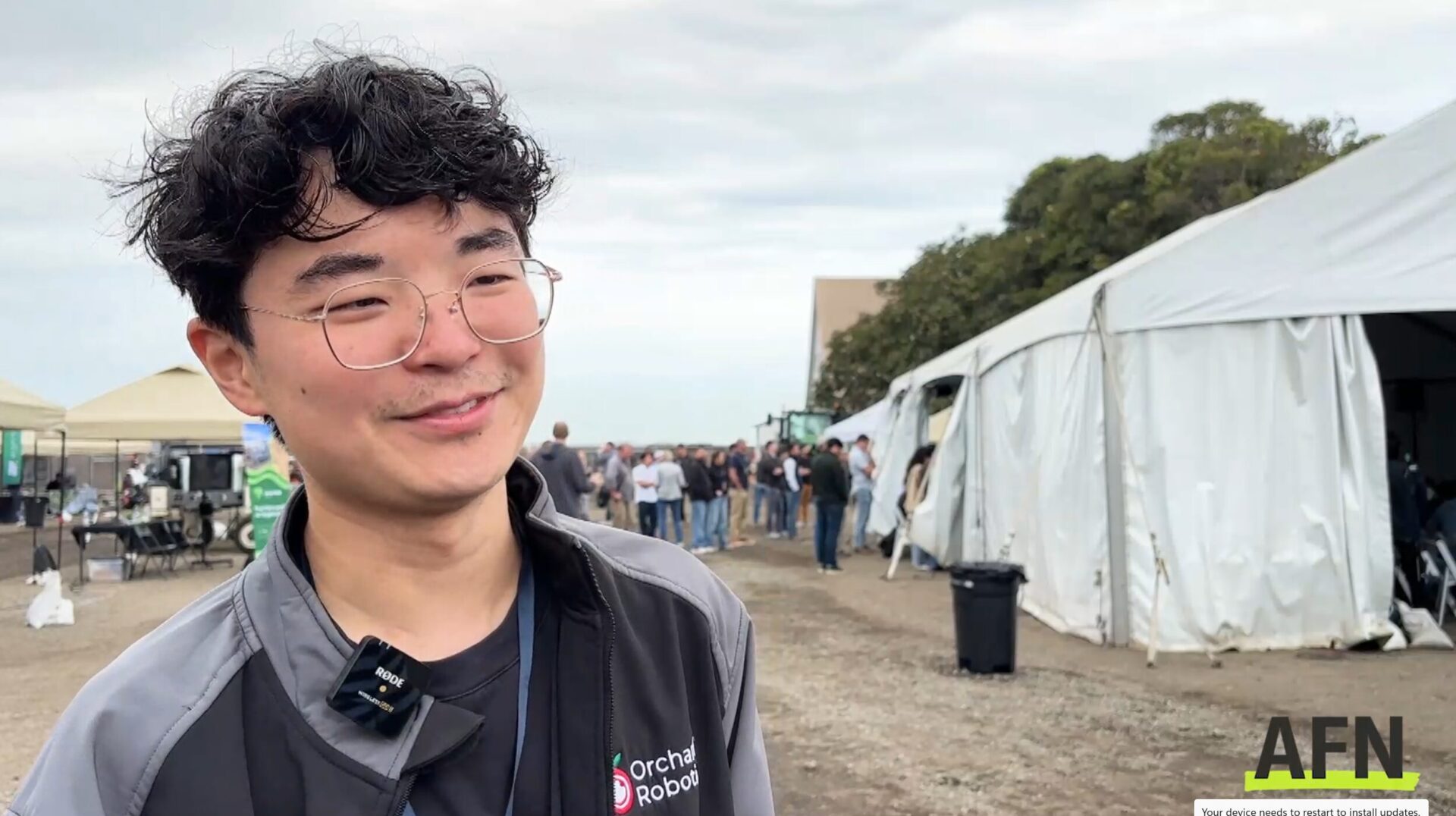
Tim Marquis, Deere's director of farm systems innovation, framed it in those terms: connecting crop-level insight with equipment that can carry out the work precisely. Orchard founder Charles Wu said the team will continue as before and aims to bring its technology to farmers broadly over the next few years.
The technology itself is practical rather than flashy. Orchard's camera mounts on tractors and other farm vehicles, capturing millions of images and measuring fruit count, size and color, growth rates, canopy health, water stress, disease and yield. Processing happens on an onboard NVIDIA Jetson computer, a sensible design given that many farms lack the connectivity to upload terabytes of raw imagery. Results feed a platform called FruitScope, which lets growers inspect conditions tree by tree. Wu says the company has worked across crops from apples and grapes to almonds, pistachios and citrus, with hundreds of systems in the field.
Wu's pitch is a rebuke to the dashboard-heavy school of agtech. Data, he argued, is useless unless a grower can act on it easily, and the average farmer should not have to become a data analyst. Some customers pipe insights into precision sprayers and spreaders that vary applications automatically; others send workers instructions through a mobile app. The biggest return, he said, comes from lower labor and input costs, with yield forecasts, which he says exceed 95% accuracy, helping plan hiring, bins, storage and sales promises.
Jorge Heraud, who sold Blue River to Deere for $305 million and later served as its VP of automation and autonomy, called the deal further validation that large agriculture companies see actionable data as valuable to farmers. He expects the trend to continue as cheaper cameras and new sensors combine with AI to produce fresh insights. The policy-relevant subtext: in an industry squeezed by labor shortages and input costs, the winners may be whoever owns both the sensor and the steel that responds to it.