In 30 Seconds
- Speaking at the IFFI Filmathon awards in Panaji, the chief minister said technology lowers costs but cannot replace human creativity.
- Goa Chief Minister Pramod Sawant said on Tuesday that artificial intelligence is making filmmaking easier to get into, cutting some of the barriers that once kept new creators out.
- Sawant noted that making a film has traditionally meant big budgets, equipment, crews and production facilities.
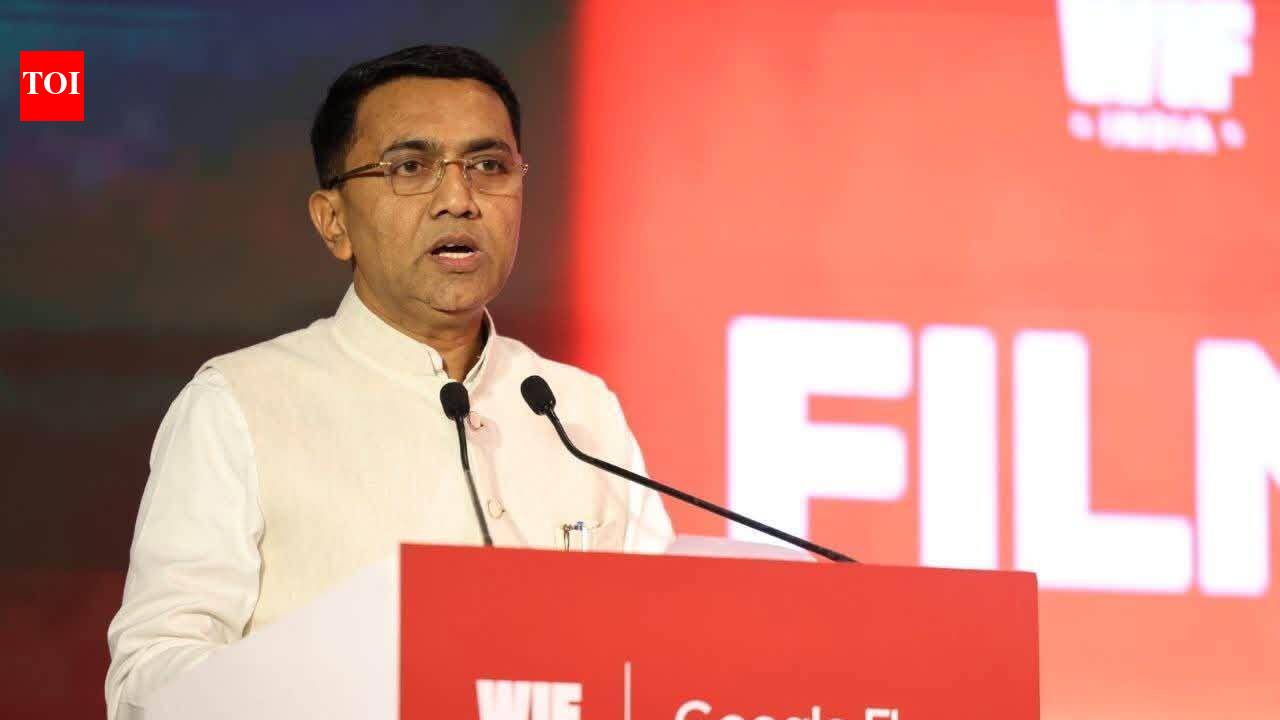
Goa Chief Minister Pramod Sawant said on Tuesday that artificial intelligence is making filmmaking easier to get into, cutting some of the barriers that once kept new creators out. He was speaking in Panaji at the Women in Film India × Google Flow Filmathon Showcase and Awards, part of the 57th International Film Festival of India (IFFI).
Sawant noted that making a film has traditionally meant big budgets, equipment, crews and production facilities. In his view, newer tools let creators try out ideas and bring original stories to the screen without all of that. He also made clear that AI has limits: it cannot replace human imagination, emotion or creative judgement. "Filmmakers remain the storytellers," he said, adding that technology simply gives them new ways to express ideas.
The Filmathon drew more than 800 registrations and over 300 submissions from across India. Five creators were shortlisted for the showcase: Romita Banerjee, Syam Manohar, Nikhil Shinde, Aswathi Naduthodi and Srishti Chaudhary. Three entries were chosen for awards. Filmmaker and festival director Ashutosh Gowariker and Women in Film India founder Guneet Monga Kapoor also attended.
The chief minister praised Women in Film India for backing women through mentorship, education, industry partnerships and professional networks. He said women have contributed a great deal to Indian cinema as actors, musicians and creative professionals, yet remain underrepresented in many filmmaking departments. He encouraged more women into leadership and creative roles, and urged Goan women in particular to become directors, cinematographers, editors, screenwriters and producers.
Sawant also pitched Goa as a place to shoot. He pointed to the state's film-shooting rules, an online single-window clearance system and financial assistance schemes. A proposed film city, he said, would offer pre-production, post-production, visual-effects and film-education facilities.
The aim, he said, is to attract more national and international productions while creating work for local technicians, artists and filmmakers. For aspiring creators, the message was that cheaper tools and state support could make it easier to start, even if the storytelling still has to come from people.