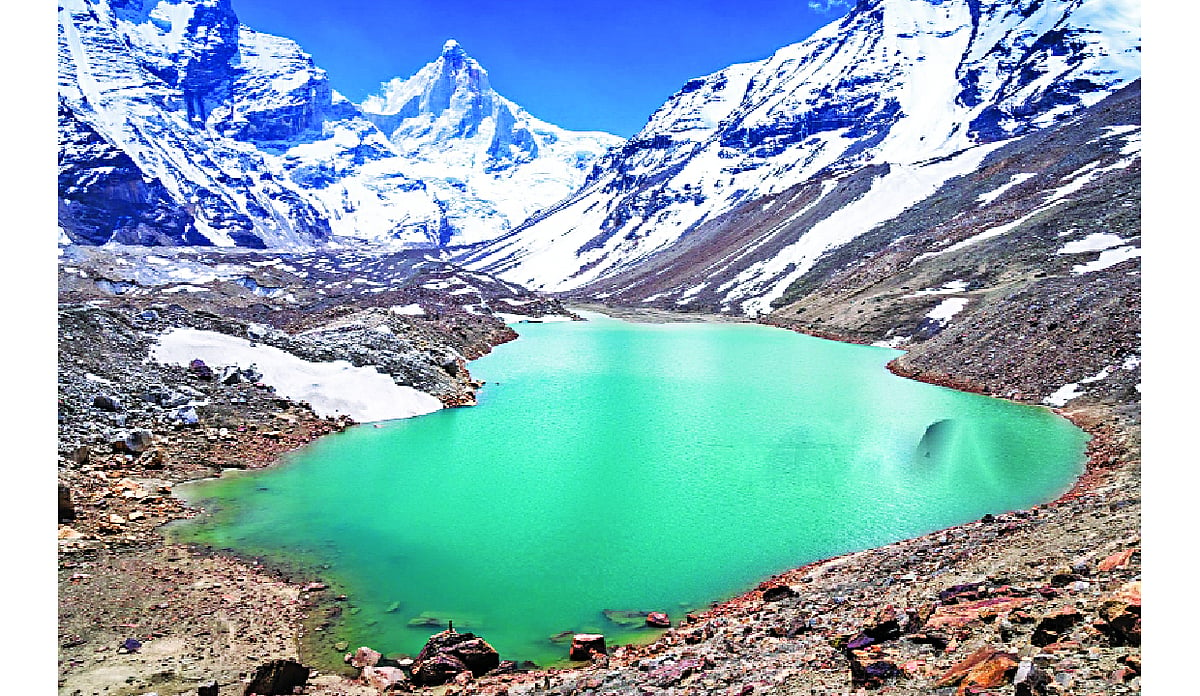
In 30 Seconds
- A Daily Pioneer analysis contends that the planet's hazards are old and predictable, and that building choices and governance decide how many people they harm.
- A new analysis in the Daily Pioneer argues that the planet's most destructive events, from glacier collapses and earthquakes to volcanic eruptions, are part of Earth's normal behaviour.
- The more practical argument is about exposure.
A new analysis in the Daily Pioneer argues that the planet's most destructive events, from glacier collapses and earthquakes to volcanic eruptions, are part of Earth's normal behaviour. The author's central claim is that the resulting crises are shaped less by geology than by human decisions about where and how we live.
The argument starts with deep time. Ice ages ended, an asteroid wiped out the dinosaurs, and continents drifted apart long before factories existed. The point is not that human activity is irrelevant. It is that the Earth has always moved, shaken and flooded, and the piece asks readers to treat those movements as the baseline rather than as malfunctions.
The more practical argument is about exposure. The same earthquake can pass almost unnoticed in an empty region and become a disaster in a crowded, poorly built city. Floods follow the lowest ground, and the trouble starts when that ground is packed with homes, roads and resorts. In that framing, the trigger belongs to nature, while the scale of the damage depends on planning, enforcement and land use.
The analysis also acknowledges that human emissions have measurably accelerated glacial retreat, ocean warming and extreme weather. Its point is that climate action and disaster preparedness are separate tasks. Cutting emissions will not stop earthquakes or eruptions, so cities still need to build for them.
There is a hopeful thread here. If disasters are the planet's routine, then they are predictable, and predictable risks can be managed through stronger building codes, protected wetlands and mangroves, and early-warning systems. The piece argues that the real fix is making long-term safety pay off in short-term politics and budgets. For readers in India and across the region, where monsoon floods and seismic zones are a regular feature of life, that shift is the most useful takeaway. The full piece is available at dailypioneer.com.