In 30 Seconds
- The Korea-Bihar AI Future Generation Programme sets out four cooperation areas, with exchanges, joint research and internships at its core.
- The agreement was signed in South Korea by Kiyoung Kim, vice-president for special affairs at Kyonggi University, and Kumod Kumar, chief administrative officer of CIMP.
- The programme covers four areas: tourism, urban development, agriculture and smart farming.
Chandragupt Institute of Management Patna (CIMP) has signed a memorandum of understanding with South Korea's Kyonggi University to explore how artificial intelligence and related technologies can be applied to farming, urban planning and tourism in Bihar.
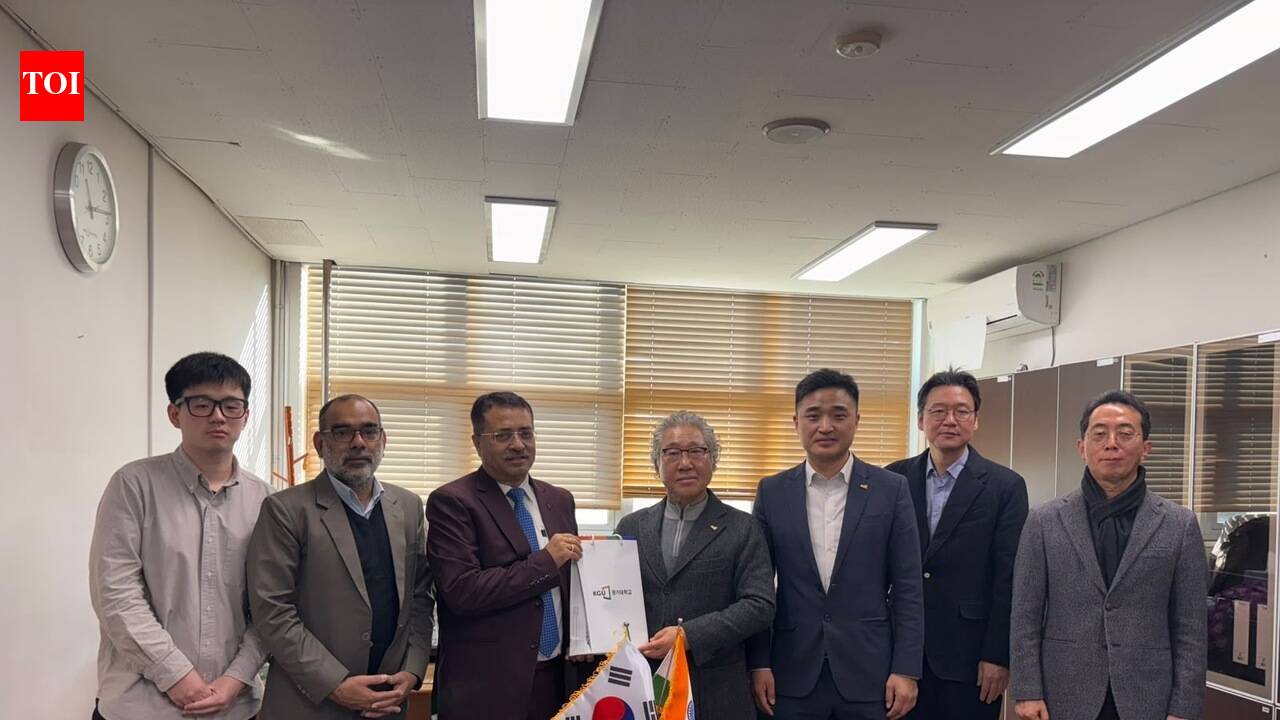
The agreement was signed in South Korea by Kiyoung Kim, vice-president for special affairs at Kyonggi University, and Kumod Kumar, chief administrative officer of CIMP. It falls under the Korea-Bihar AI Future Generation Programme.
The programme covers four areas: tourism, urban development, agriculture and smart farming. The pairing of agriculture and smart farming as separate tracks signals that farm technology is a major focus of the arrangement.
On the academic side, the two institutions plan joint research, student and faculty exchanges, internships and workshops. Joint publications and faculty development programmes are also part of the plan. Students could work on projects involving AI, sustainable tourism and smart farming, while faculty members would get openings to collaborate on research and teaching.
Kumar said the tie-up would give Bihar access to South Korean expertise in technology and AI. He stressed adapting global practices to local needs, with the aim of creating jobs and supporting economic growth. Kim said Kyonggi University, based in Suwon, would bring its experience in education and technology and help widen learning opportunities for young people.
CIMP director Rana Singh said the institute wants to use the partnership to strengthen Bihar's institutions and attract investment. The MoU is a framework for cooperation; the source does not give funding figures, timelines or specific projects, so concrete outcomes will depend on what the two institutions put in motion next.