In 30 Seconds
- The state higher education department has asked universities to drop the European-style gown and hood at convocations in favour of traditional Indian handloom attire.
- Graduating students in Bengal may soon collect their degrees wearing an uttariya, a rectangular cloth draped like a scarf, instead of the usual black robe.
- The advisory went to state-aided and private universities alike.
Graduating students in Bengal may soon collect their degrees wearing an uttariya, a rectangular cloth draped like a scarf, instead of the usual black robe. The state higher education department issued an advisory on Tuesday asking universities to adopt traditional Indian attire made of handloom fabric for convocations and similar ceremonies.
The advisory went to state-aided and private universities alike. It follows a UGC advisory of January 16, 2024, which requested all universities to move to handloom fabric for ceremonial dress. The state's note says such clothing suits India's climate better, builds pride in local culture and supports rural weavers.
Universities are being asked to introduce an uttariya for undergraduate, postgraduate and PhD degree-holders. They can choose their own designs, keeping Indian tradition and the weather in mind. So the final look will differ from campus to campus.
Higher education minister Jagannath Chattopadhyay had said recently that the robe and mortar board should go. He said the UGC has issued several notices since 2015 and that 90 to 92 central institutes have already switched. He asked why the state should follow a European model, and pointed out that Visva-Bharati never has.
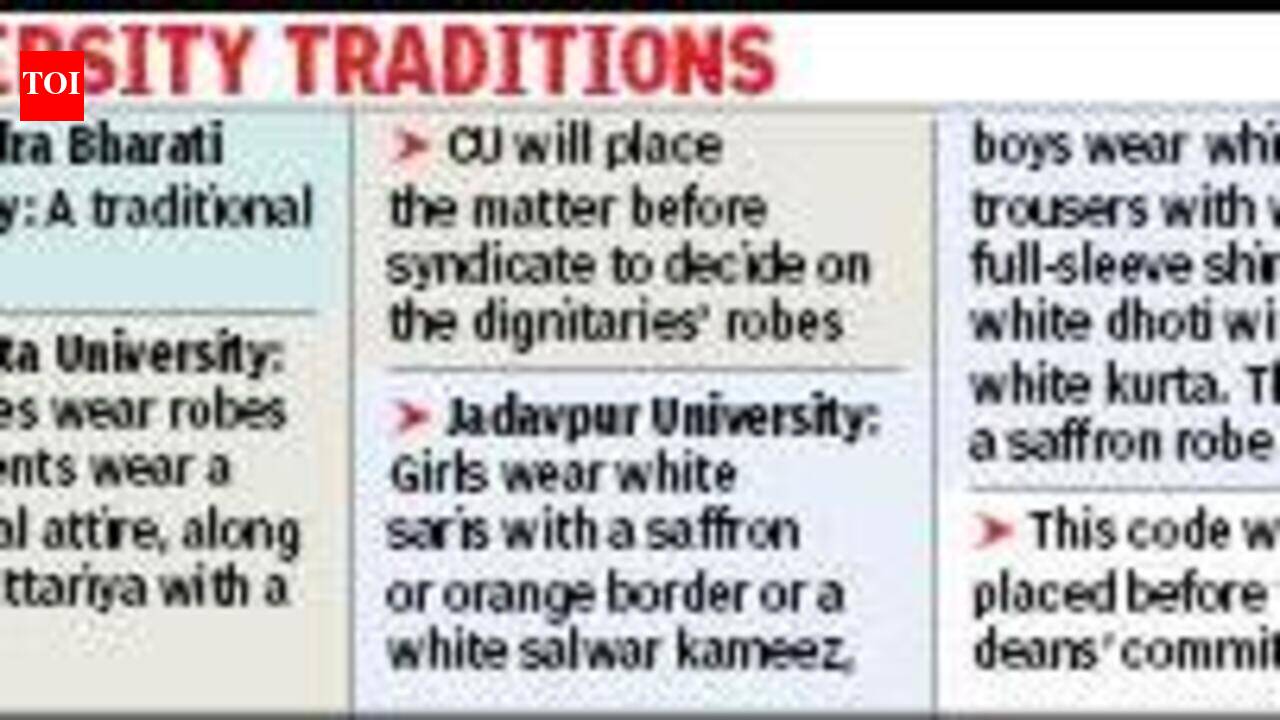
Some Bengal universities are already partway there. Rabindra Bharati University uses traditional attire at convocation. At Calcutta University, students wear traditional dress with an uttariya carrying the CU logo, though dignitaries in the academic procession still wear coloured robes.
Jadavpur University has its own dress code. Women wear white saris with a saffron or orange border, or a white salwar kameez. Men wear white trousers and full-sleeve shirts, or a dhoti and kurta, with a saffron robe on top. That code will go to the university's committee of four deans for discussion.
Since it is an advisory, each university will decide for itself. Read the original report here.