In 30 Seconds
- At a New Delhi reception, Bangladesh's acting high commissioner credited India's role in 1971 and pointed to military cooperation as a pillar of a relationship still being recalibrated.
- Rahman said Bangladesh values the contribution and sacrifices of Indian people and military personnel during the war, calling it a respected part of shared history.
- Looking ahead, she listed disaster response, maritime security and regional stability as areas where the two armed forces have a role.
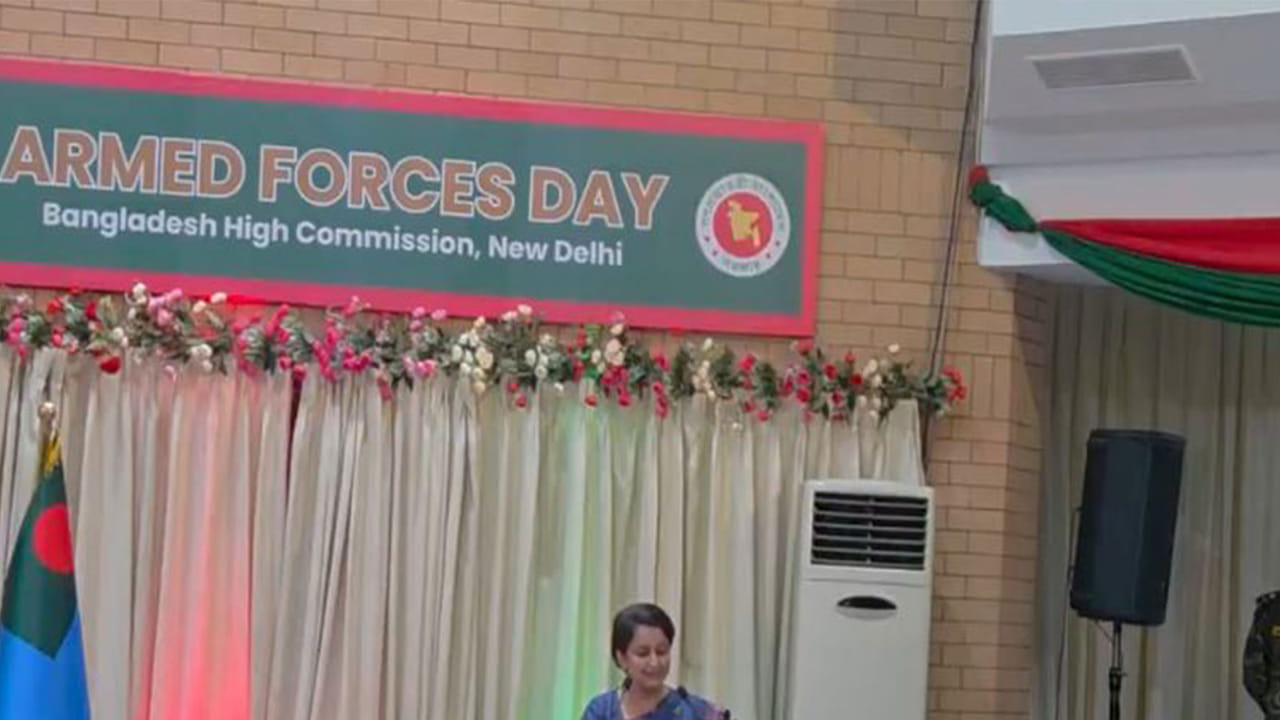
Bangladesh's Acting High Commissioner to India, Preeti Rahman, used a reception in New Delhi on Saturday marking the 55th Armed Forces Day of Bangladesh to acknowledge India's part in the 1971 Liberation War and to argue for deeper military cooperation between the two neighbours.
Rahman said Bangladesh values the contribution and sacrifices of Indian people and military personnel during the war, calling it a respected part of shared history. She also paid tribute to Bangladesh's martyrs and freedom fighters and recalled the foreign governments and friends who stood with the country in 1971.
Looking ahead, she listed disaster response, maritime security and regional stability as areas where the two armed forces have a role. She said the government led by Prime Minister Tarique Rahman is committed to modernising Bangladesh's military, with attention to emerging technological and strategic challenges.
She also pointed to Bangladesh's nearly four decades of participation in United Nations peacekeeping, which she said has earned the country recognition as a leading contributor. On training links, she thanked India's National Defence College, where four Bangladeshi officers recently finished a year-long course, and hoped such exchanges would grow.
The chief guest, Lieutenant General Yashpal Singh Ahlawat, India's Director General of Military Intelligence, called the two countries natural partners and defence cooperation an important pillar of engagement. He said the relationship between the forces rests on trust, understanding and mutual respect, and cited training programmes, multi-domain cooperation, cultural exchanges, border engagements and visits at various levels.
Why it matters: such receptions are ceremonial, but the messaging is deliberate. Both sides chose to foreground institutional military ties, rather than political friction, at an event anchored in the shared memory of 1971. The remarks were general and announced no new agreements or exercises, so the substance of any deepening will depend on follow-through in training, maritime and disaster-response cooperation.