In 30 Seconds
- The two-day meet puts a spotlight on a perennial gap in India's security architecture: getting the Centre, states and courts to work off the same playbook.
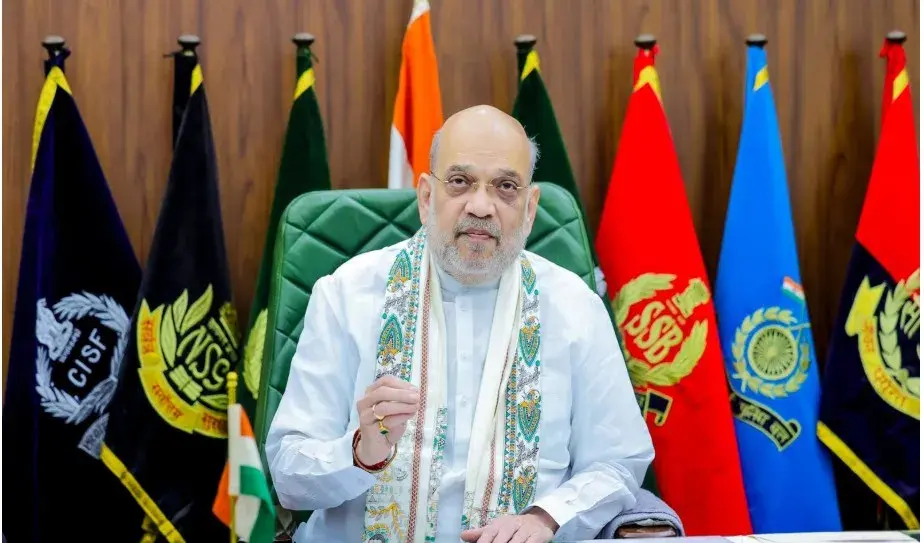
- Union Home Minister Amit Shah is set to inaugurate a two-day national Anti-Terror Conference in New Delhi on Thursday, November 19, organised by the National Investigation Agency (NIA).
- The annual gathering brings together senior police officers from states and Union Territories, central security agencies, investigators, and specialists from the legal, forensic and technology fields.
Union Home Minister Amit Shah is set to inaugurate a two-day national Anti-Terror Conference in New Delhi on Thursday, November 19, organised by the National Investigation Agency (NIA). Cross-border terrorism is the central theme, according to a statement from the agency.
The annual gathering brings together senior police officers from states and Union Territories, central security agencies, investigators, and specialists from the legal, forensic and technology fields. The stated goal is to sharpen coordination and shape strategies for newer kinds of threats.
The buzzword this year is a "whole-of-government approach". In plain terms, that means central and state agencies are being urged to share information faster and act together, rather than discovering midway through a case that two offices were holding different halves of the same file. The NIA says the sessions will look at building firmer channels for that exchange.
The agenda leans heavily toward what happens after an attack, not just before it. Sessions will cover gathering evidence from foreign jurisdictions, using digital forensics and data analysis, and managing terror trials effectively. Convictions, after all, depend on admissible proof and courtroom stamina as much as on arrests.
Other topics include countering radicalisation, hybrid threats, disrupting terror financing networks and drawing up future-oriented counter-terrorism strategies. Participants will also discuss strengthening institutional capacity as security challenges evolve.
A separate capacity-building programme for state police personnel and practising professionals will run alongside. It will focus on applying the new criminal laws in terror investigations, handling digital evidence during prosecution, trial strategy and case management, and the special legal provisions governing terror-related offences. The NIA says it will also address defence proceedings, witness protection and government initiatives to bolster prosecution.
The policy takeaway: the emphasis on training state police in the new criminal laws and digital evidence suggests the real bottleneck is turning investigations into sustainable prosecutions, an area where state-level readiness matters as much as central agency muscle. Source: The Kashmir Images.