In 30 Seconds
- Amit Shah's endorsement of Sukhbir Badal as senior partner signals an attempt to rebuild the NDA's footprint in a state AAP now dominates.
- The Shiromani Akali Dal and the Bharatiya Janata Party on Tuesday ended a six-year estrangement and announced they would contest the upcoming Punjab assembly elections together.
- The political logic is sharper than the rhetoric.
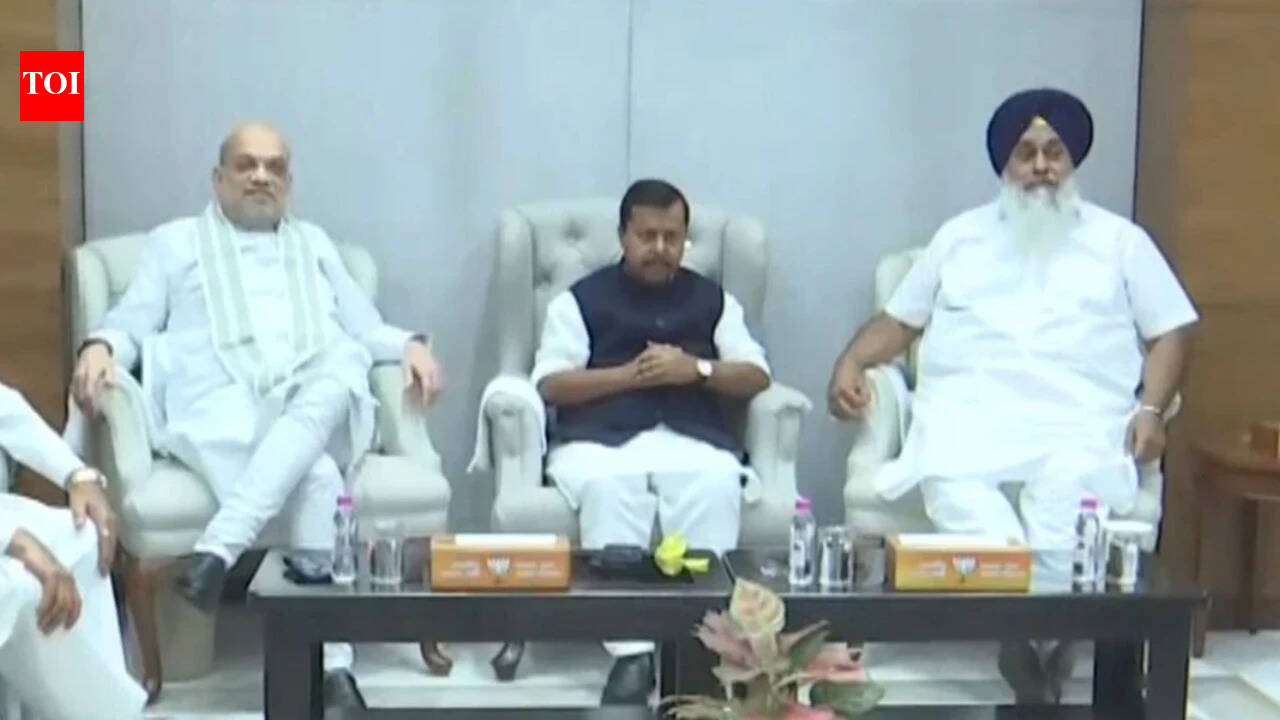
The Shiromani Akali Dal and the Bharatiya Janata Party on Tuesday ended a six-year estrangement and announced they would contest the upcoming Punjab assembly elections together. Home minister Amit Shah made the announcement in New Delhi alongside SAD president Sukhbir Singh Badal and BJP president Nitin Nabin, and he described the Akalis as the "big brother" of the partnership. Shah also suggested the regional party would have a claim to the chief minister's post if the NDA returns to power in the state after a decade.
The timing was deliberate. The announcement coincided with Guru Nanak's birth anniversary, a date that gives the pact a Sikh religious resonance that a purely electoral deal would lack. Shah framed the tie-up as an emotional and historical bond rather than a transactional one, pointing to Hindu-Sikh ties in a border state with a long record of communal strain and militancy. Nabin called it a "natural alliance," and Badal, who said the partnership would deliver 100 of the 117 seats, invoked his father's description of the relationship. Badal did not formally receive a CM announcement, though he is widely seen as the obvious face.
The political logic is sharper than the rhetoric. The Akalis split from the NDA over the farm laws, which have since been scrapped, and the party's fortunes have fallen steeply since its decade in government ended in 2017. That defeat came after a loss of core voters tied to the handling of sacrilege cases, drug abuse, and corruption allegations, and it opened the field for AAP, which swept the 2022 polls. The BJP, for its part, has grown in urban areas but has struggled to extend beyond them. Each party has a gap the other can fill, which explains why both are now willing to accept a junior role in the arrangement.
The alliance now rests on a specific bet: that the old pairing of BJP's Hindu base with the Akalis' farmer constituency can be stitched back together. Whether that works depends on how far the farm protests have damaged the Akalis' standing with rural voters and whether those voters see the BJP as a trustworthy partner. The BJP is also expected to contest more seats than the 23 it traditionally took, which will test whether the coalition can manage its internal allocation without alienating local leaders.
Congress has already attacked the deal, with its Punjab in-charge Sachin Pilot calling it a compromised alliance born of weakness and demanding explanations on the reasons for the original split, the government's stance on minimum support prices, and the deaths of protesters during the farmers' agitation. Those questions will likely shape the campaign. With AAP governing and Congress also competing for the same voters, the revived NDA pairing enters a crowded field where the outcome will turn on whether traditional voters respond to the reunion. Full details of the announcement are in the original Times of India report.