In 30 Seconds
- A US civil suit naming the national security adviser and a former RAW chief raises questions about legal exposure, diplomatic signalling and rivalry at the top of New Delhi's security machinery.
- A civil case in an American court has drawn National Security Adviser Ajit Doval and former Research and Analysis Wing chief Samant Goel into a legal dispute that reaches well beyond a New York courtroom.
- Commentary by senior journalist Anil Tyagi, published in the Asian Age, frames the episode as more than a legal matter.
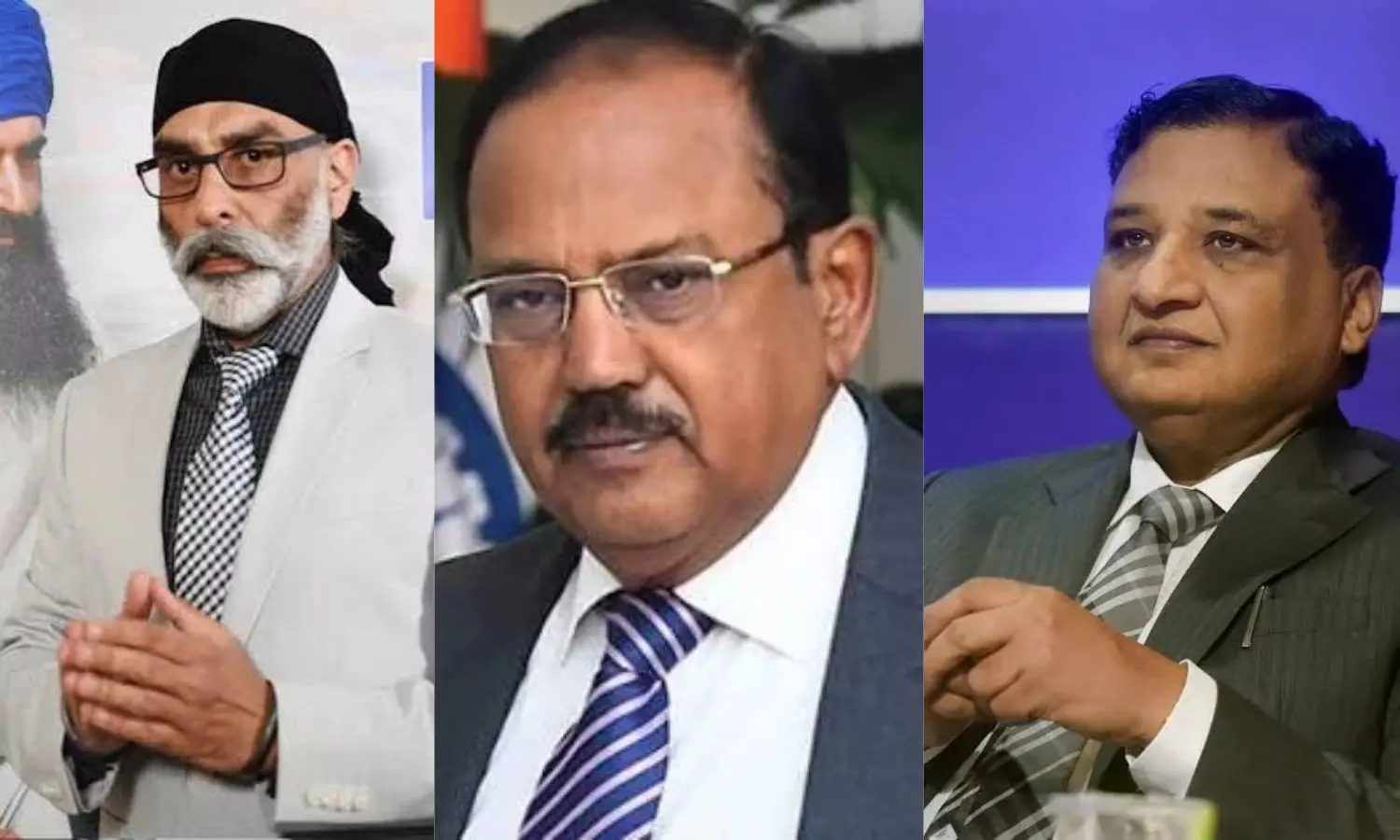
A civil case in an American court has drawn National Security Adviser Ajit Doval and former Research and Analysis Wing chief Samant Goel into a legal dispute that reaches well beyond a New York courtroom. The summons, issued in a suit brought by Khalistan separatist Gurpatwant Singh Pannun, an American citizen, alleges that the two Indian officials plotted his assassination in 2023. India has rejected the allegations as fabricated and malicious. Nothing in the public record so far shows that Washington funded Pannun or shaped the lawsuit, but the timing has prompted intense speculation in New Delhi about what the case signifies.
Commentary by senior journalist Anil Tyagi, published in the Asian Age, frames the episode as more than a legal matter. In intelligence work, influence tends to accumulate slowly through access, personal networks and intelligence-sharing arrangements, and it is seldom challenged head-on. When a figure grows that influential, pressure can surface from an unexpected direction. The column argues that the summons has exposed a vulnerability in India's national security ecosystem, one that exists whatever the eventual outcome of the suit.
Much of the Delhi discussion has centred on a reported rivalry between External Affairs Minister S. Jaishankar and Mr Doval. Jaishankar leads India's diplomatic engagement and has a strong standing among foreign ministers. Doval sits at the core of Prime Minister Narendra Modi's security strategy. The column notes that Modi is understood to be aware of tensions between the two, and that both men have cultivated ties with global and domestic power centres. Such accounts are based on reporting and insider talk rather than official confirmation, and they should be read with that caveat.
The column also points to a March 2025 security conclave in the capital, which Doval hosted and which brought together a range of foreign intelligence chiefs, including officials from the United States, Canada, Britain, Russia, France and Saudi Arabia. Gatherings of this kind underline how central Doval's network has become to India's intelligence diplomacy. That centrality is precisely what makes a foreign court proceeding against him consequential, since it places a serving security official's conduct in an adversarial legal setting.
The legal questions are separate from the political ones. A civil summons is not a criminal finding, and its practical reach depends on jurisdiction, the handling of service through Indian channels and the immunities that officials may claim. Yet the reputational cost can build regardless of how the case ends. For a government that prizes control over its intelligence apparatus, the prospect of its officials being examined in a foreign courtroom, even on allegations it rejects, is a problem in its own right.
The episode also has a wider administrative dimension. Tyagi's column observes that senior bureaucrats are watching for signals about where authority will rest and whose instructions will prevail. Uncertainty over power at the top tends to make officials cautious, pushing decisions upward and encouraging a defensive style of governance. Whether the Pannun summons becomes a lasting strain or a passing controversy will depend on how transparently the government handles the case and how cleanly it resolves internal questions of authority.
For readers, the central point is that the lawsuit is a legal event with political consequences. Whether it amounts to a diplomatic warning, a court process with limited reach, or a symptom of a larger contest for influence will become clearer only as the proceedings unfold. The column is a useful lens on the questions being asked in Delhi, though its interpretations are the author's own and not established fact. Full commentary is available at the original Asian Age column.